Periodontitis and Pregnancy

Posted by Dental News Team On January - 8 - 2010

Pregnancy is a biological phase in a woman’s life accompanied by intense hormonal changes

The rise in female hormones, estrogen and progesterone, directly affects the periodont, since the gums possess estrogen and progesterone receptors.

This way, existing inflammations of the gums (bleeding gums) can be exacerbated or more easily triggered during pregnancy. Recent studies show that if periodontitis goes untreated, this can be a risk factor leading to premature birth, and should thus be treated as soon as possible.
-

schwangerIn periodontitis, various bacterial substances are released from the gums. These substances cause our immune system to release greater numbers of antibodies  – called cytokines.
Amniotic fluid has been shown to contain cytokines, and there is a connection between the rise in cytokines and premature contractions.
Experiments on golden hamsters have shown that certain cytokines for gram-negative bacteria can, depending on dosage, lead to lower birth weight and even birth defects!
-

Nowadays we know that periodontitis can make the risk of premature birth 7.5 times higher.

-

Moreover, studies indicate a connection between periodontitis and premature babies with low birth weight.
-

There is a trend towards non-surgical periodontitis treatment, which has been shown to have a positive effect on the course of pregnancy.

-

Source: 2009_ paro_schwangerschaft (perio pregnancy)

VN:F [1.8.1_1037]
Rating: 0.0/5 (0 votes cast)
VN:F [1.8.1_1037]
Rating: 0 (from 0 votes)

Popularity: 12% [?]


general topics periodontology

Treatments for parodontitis, gingivitis and periimplantitis

Posted by Dental News Team On October - 27 - 2009

Treating parodontitis, gingivitis and periimplantitis

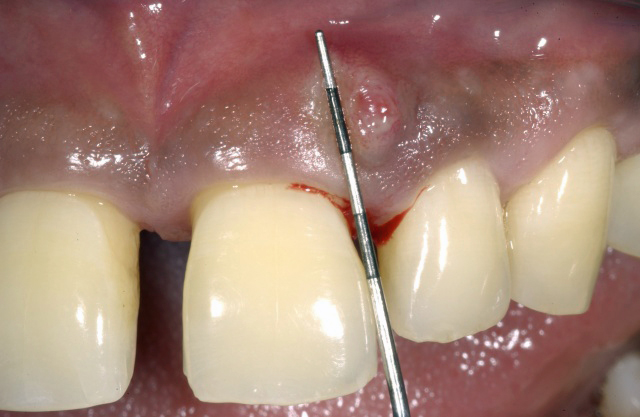
parodontitis1Just about every other person over 35 suffers from parodontitis, also known as parodontosis.

It all begins almost without you noticing it and without pain, bleeding gums, and sometimes occasional flare-ups of pocket abscesses. But bone disappears imperceptibly, leading to tooth loss. Plaque bacteria are what causes parodontitis and cavities, but most people refrain from getting treatment until their teeth start getting loose!

If started early, parodontal treatment can stop inflammation of the periodontal apparatus. Unfortunately, many different types of treatment are “advertised”, such as cryotherapy or phototoxic therapy. None of these types of treatment have ever been scientifically proven to work, but they are still offered at very high rates.

A short film at checkdent.com will show you how proper parodontal treatment works – click here for link.

VN:F [1.8.1_1037]
Rating: 0.0/5 (0 votes cast)
VN:F [1.8.1_1037]
Rating: 0 (from 0 votes)

Popularity: 17% [?]


periodontology