

Does cutting down on sugar help to treat yeast infections?

About 50 – 80% of all healthy persons have this yeast in their mouth and digestive system. If stool is found to contain large amount of this yeast, then you have a “candida infection”. This is believed to disturb normal intestinal processing of water, sugar and natrium and cause diarrhea.

Dental treatment under general anaesthesia

Some people are terrified of going to the dentist. Can they get help?
What used to be the exception years ago has now become a common procedure – dental treatment under general anaesthesia.
We’ve found out that one dental team in Austria goes even further and offers such patients not only treatment under anaesthesia, but also help [...]

Jaw pain – what now?

It has been found that the jaw is perfectly capable of adapting to a new set of teeth, this just takes some time. So nowadays doctors like to wait before starting any treatment. Only one device has been found to help in the acute phase of jaw pain – the Michigan rail.

Can teeth grow back?

Researchers speculate that if the trigger for tooth growth is found then one day teeth might be stimulated to grow back in adults. Although mammals only possess one set of teeth, some vertebrates have several sets of teeth that grow!

Dentists and hygiene

Have you ever found yourself sitting in the chair at the dentist and asking yourself who had those instruments in their mouth before you? Have they been properly disinfected and sterilized?

Dental ceramic crowns scientifically approved

Posted by Dental News Team am 15, Oct - 2009

cosmetic-dentistry prostethics

Ceramic materials finally win out in dentistry!
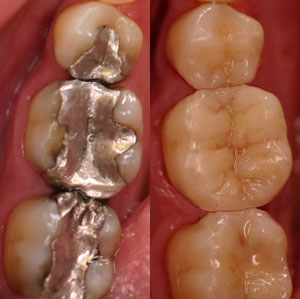
amalgam-keramikWhy do so many dentists continue to recommend the use of metals in dentistry? The answer is simple.
Metallic materials can be cemented, a very common procedure in dentists’ offices. Ceramics, on the other hand, have to be glued  – a procedure known as bonding.
Compared to cementing, glueing is a very tedious process, thus many dentists ignore manufacturers’ instructions  and so, for example, only rarely use a coffer dam. Some also try to shorten the glueing procedure e.g. by simply omitting certain glue components.
-

Sloppy work has given ceramics a bad name, even though they have been used in dentistry for about 20 years now.
-

Veneers, ceramic inlays and ceramic crowns are scientifically acknowledged methods of treatment – but it is important to use them wisely!
-

Ask your dentist if he or she regularly works with ceramics, otherwise you might be better off with a gold inlay!
-

Source: 2009_ keramik-indiziert (ceramics indicated)

VN:F [1.8.1_1037]
Rating: 0.0/5 (0 votes cast)
VN:F [1.8.1_1037]
Rating: 0 (from 0 votes)

Popularity: 9% [?]

Leave a Reply